



Photographs Jeandri Streicher
WHERE Rawsonville
SIZE OF GARDEN 1ha
TYPE OF SOIL Loamy and sandy
The blue and red dragonflies at the stream, the pond and the coolness of the forest are some of my favourite things in the garden. - Retha

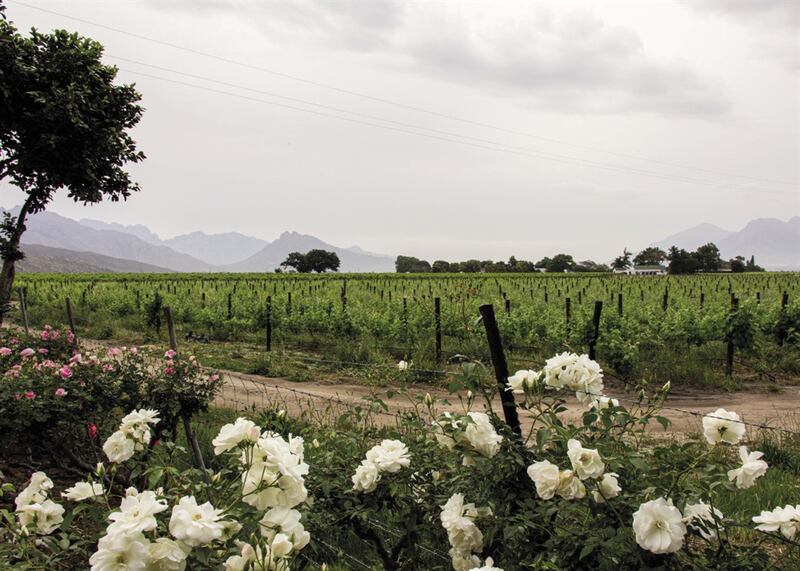
When you drive through Le Domaine's gate and see the farmhouse and old oak trees, you know why Retha Alberts can't bear to sell this property.
"We put so much into this place," she says. "It was a dream of mine and my husband Kobus's that became a reality. We had always wanted to move from the city to the platteland and to transform the house and garden into what it is today - it was like turning our own Cinderella into a princess. The loving makeover was very meaningful and satisfying for us. And waking up there in the morning to the sound of the bubbling stream and the birds singing was indescribably wonderful.
Our blood, sweat and love lie here at Le Domaine. - Retha

Read more about https://www.news24.com/home/gardening/plantofthemonth/plant-of-the-month-indigenous-watsonias-20220422Watsonias here.
"We bought the smallholding, surrounded by vineyards and with a view of the Slanghoek Mountains, in 2004. We then set about revamping the house and laying out the garden, bit by bit. Back then, all the garden had was a barbed wire fence, old oak trees (some of which had blown over), and a perennial stream running through the back. We tackled the transformation slowly but surely."
Sadly, Kobus passed away in 2011 and Retha temporarily moved to Muscat in Oman two years later for work. Since then, the farmhouse has been rented out.

Indigenous forest
Kobus's first step was to do a sketch of the garden. He carefully considered what would stay and what needed to be removed and decided to plant 120 indigenous trees. To create privacy between the house and what was then a guesthouse, about 45 of the 120 trees were planted close together to create a forest feel. The other trees were strategically placed in the rest of the garden so that in the event that more oak trees blew over or died, there would still be enough trees to provide shade. Most of the trees were purchased at Tulbagh Nursery.

"It felt right to plant indigenous trees," says Retha. "They attract birds and butterflies, owls nest in them and they provide much-needed shade. The forest elder (Nuxia floribunda) is one of my favourites and gives me so much pleasure in summer when it's in full bloom. There are also yellowwoods, white stinkwoods, fever trees, paperbark thorn trees, pompon trees and karees.
Plant list
Hardy indigenous plants, with a few roses for cut flowers, add colour to Le Domaine's garden. The plants include:
• Agapanthus
• Arum lily (Zantedeschia aethiopica)
• Bush lily (Clivia miniata)
• Crane flower (Strelitzia reginae)
• A variety of ferns
• Pelargonium
• Roses
• Smelly spurflower (Coleus neochilus)
• Vygie
• Watsonia
• Wild iris (Dietes)
• Wild rhubarb (Acanthus mollis)
Water and nutrients
Initially, Kobus and Retha started gardening with cuttings and bulbs that they got from friends and family. Over time, they began to cultivate their own cuttings. Later, they even set up a hydroponic tulip nursery on Le Domaine.
"Kobus was an entrepreneur and saw the opportunity to grow tulips hydroponically in South Africa. We visited several greenhouse farms in the Netherlands before embarking on this project. It was a risk, but with hard work and dedication, it developed into a successful business. These days, my son Adriaan runs the nursery click here on behalf of the international company Bloomia and there are tulips ready to harvest every day of the year," says Retha.


All the water from the hydroponic tulip nursery is stored in tanks and re-used in the garden. The nutrients added to the water for the tulips work wonders in the garden. Extra fertiliser and nutrients are therefore not needed and no poisons are used. Homemade compost is applied to the garden on a regular basis.
The stream that runs past the back of the house adds an air of tranquillity to that part of the garden. "It was our favourite spot in which to hang out. In summer, we would cool off in the stream and keep watermelons cold in the water. The garden around the stream evolved naturally without much planning. The old oaks provide shade, while wild irises, arum lilies, watsonias, ferns and bush lilies add colour beneath the trees.


